US Army Corps of Engineers has engaged in a long range study of the feasibility of managing the storm risks associated with sea level rise in our area. Similar studies are underway in cities all up the East Coast including Norfolk. Only one structural measure can advance in a planning area. Of the many possible projects under study, the Lynnhaven Surge Barrier has been identified by the USACE as the Early Actionable Element.
Highlights of recent presentation to City Council on November 17, 2026: (listen here to full briefing)
Conditions if project is not undertaken: Failure to undertake the project could result in the loss or severe damage of approximately 63,000 structures, including homes, hospitals, and other critical infrastructure, with projected damages estimated at $4 billion. Models predict potential inundation depths of 5 to 10 feet in affected areas.
Public Works Director L.J. Hansen emphasized that the $4 billion estimate represents damages from a single event, noting that Virginia Beach would likely experience multiple flooding events over time resulting in substantially greater cumulative losses. Councilman Schulman further noted that the projected damages would result in long-term loss of property tax revenue resulting from the destruction of these structures. The loss of this future tax revenue represents an additional economic consequence of the no-action alternative that should be incorporated into the overall cost assessment.
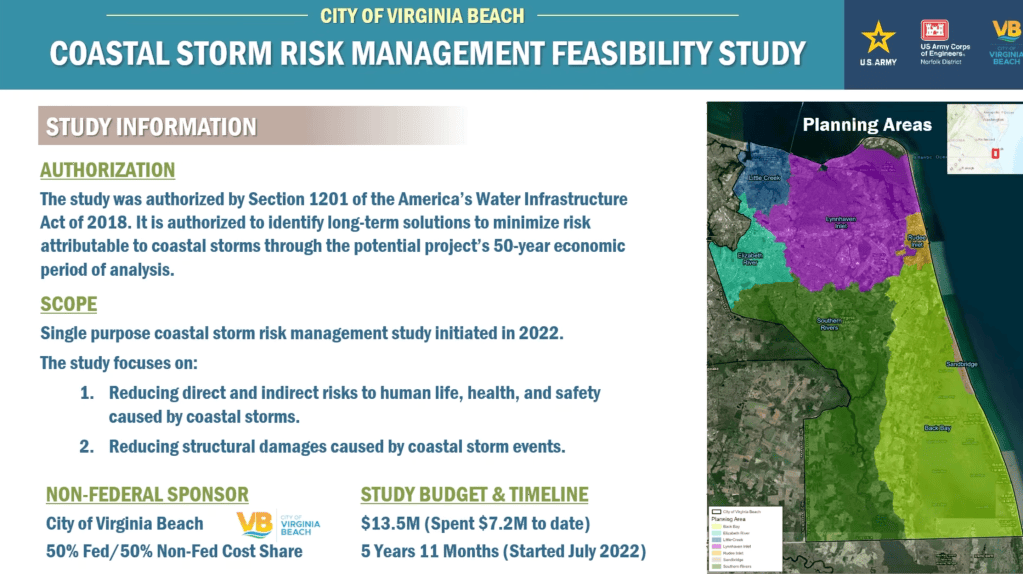
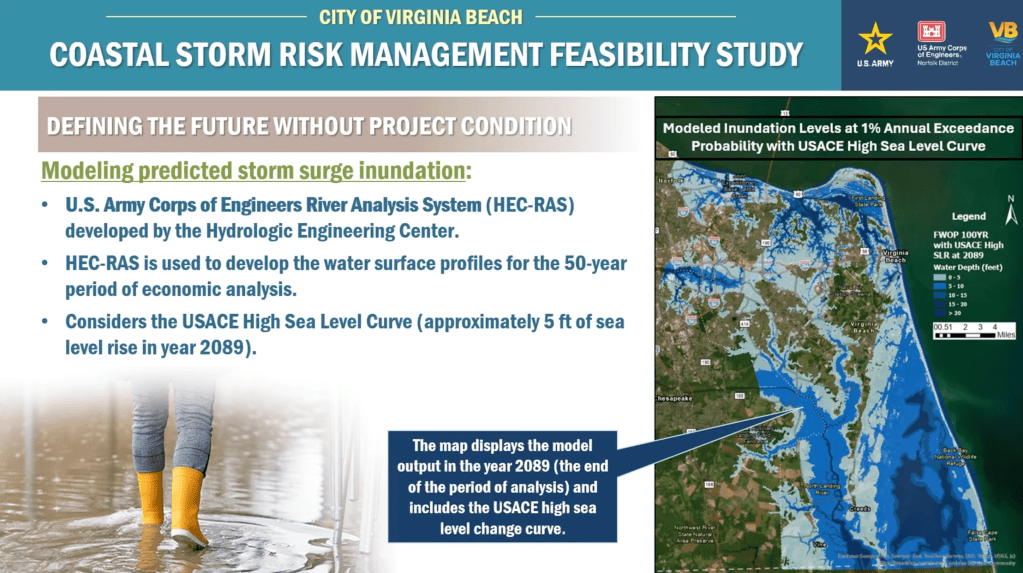
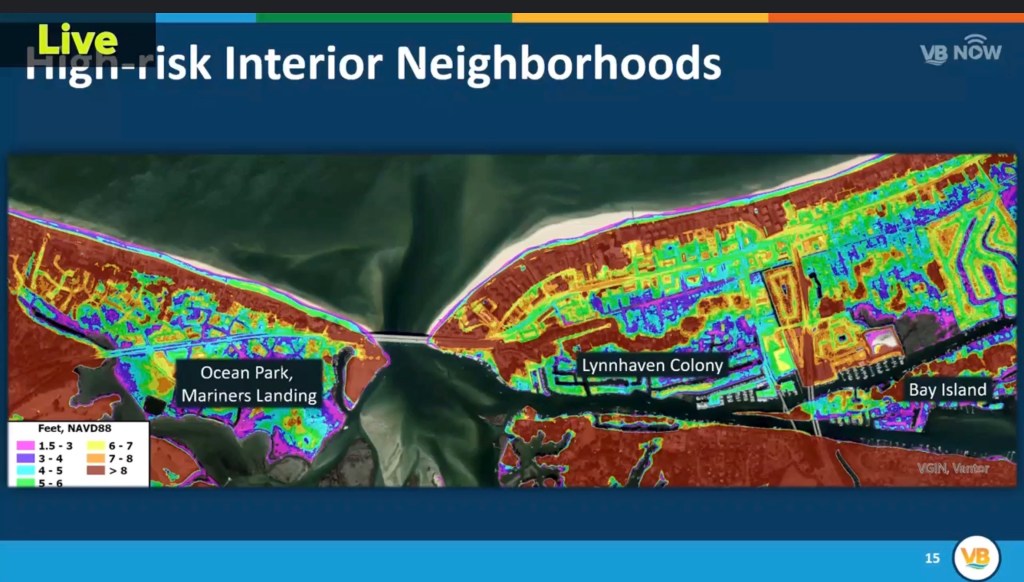
Presently the project is under ongoing study. The next step is for the City Council to submit a Letter of Support in Fall 2027.
Design Changes: The project has undergone significant design changes since the April 2026 City Council Briefing.
In the April presentation, this was used as an example of the type of surge barrier that might be used:
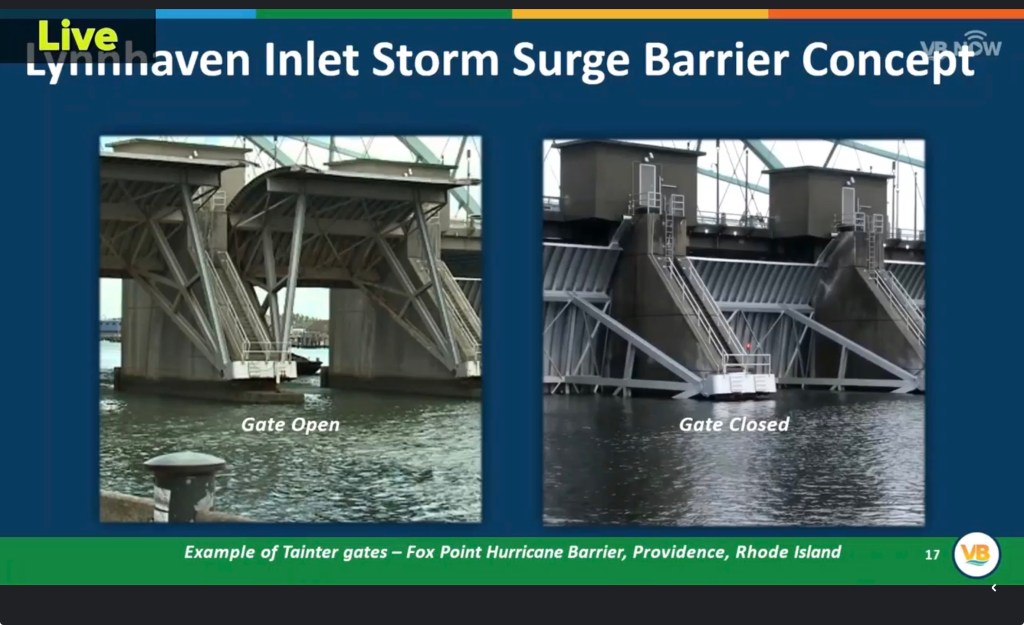
Here is the current design concept. The middle gate would be stored underwater when not in use.
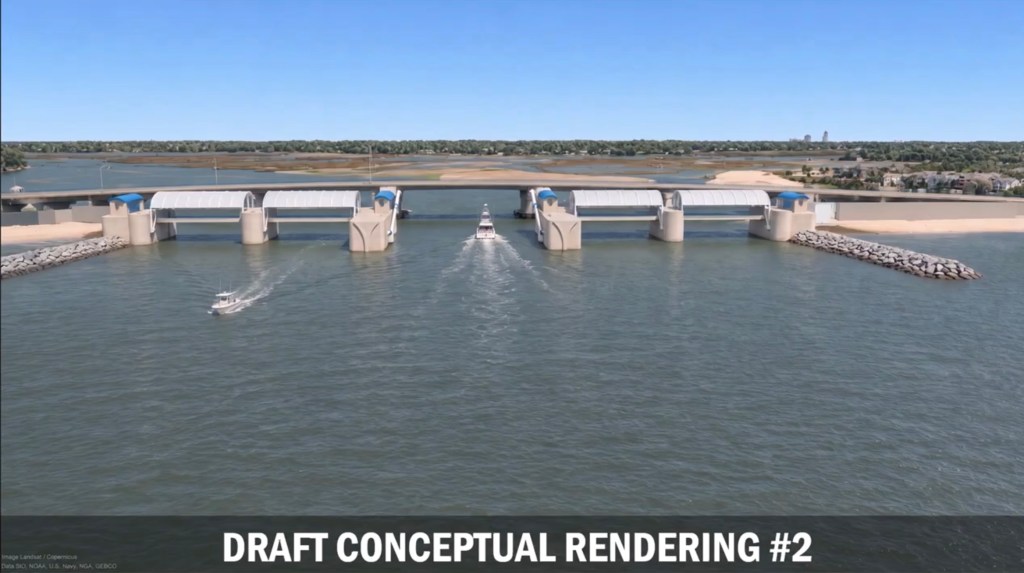
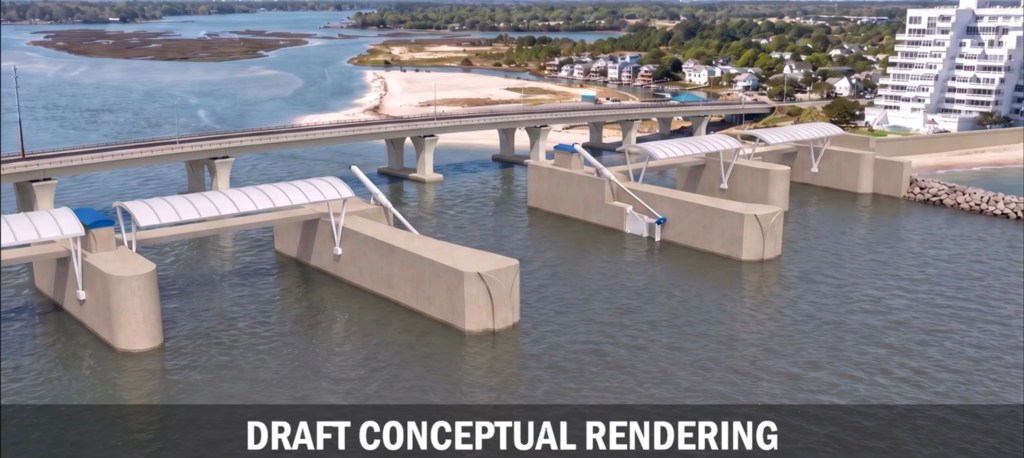
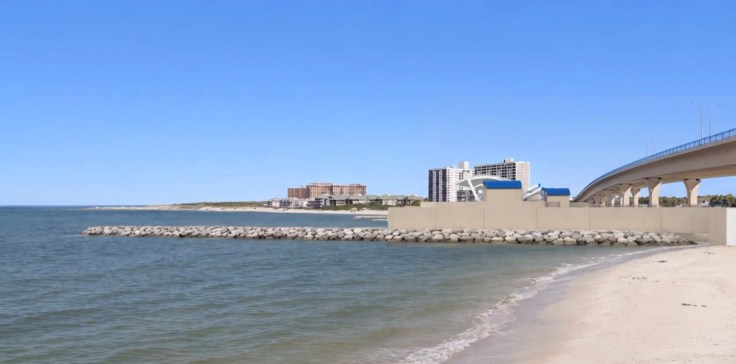
The design incorporates significant dune enhancement including 8 beach renourishments included in the budgetary projections, one every 6 years. The management of beach renourishment would change to be similar to Resort Area beaches funded by federal money.
Questions Remain:
- Many residents and environmental organizations have raised concerns about impacts of interrupting natural water flow to natural areas and wildlife. How long would the gates be closed for a typical event? 24 hrs? 48 hrs? Are these impacts being studied and considered in the design phase?
- How would this project work in concert with current Stormwater Mitigation projects? Duplication? Hinderance? Enhancement? This was addressed in part in the briefing, more detail would be helpful.
- Would early action aid CoVB in gaining Federal funding and loans since many East Coast cities are facing the same situation and the costs are so high? Some discussion but more details needed.
Coming next week: Timeline for CoVB commitments- many steps along the way.

